
Blog
iPhone 18 Pro: Apple Redefines the iPhone Once Again

From the original iPhone in 2007 to today’s Pro models, Apple’s smartphone has evolved from a revolutionary communication device into a powerful computer that fits in your pocket.
With the iPhone 18 Pro and iPhone 18 Pro Max, Apple is once again focusing on the areas that matter most in everyday use: photography, performance, battery life, connectivity and artificial intelligence.
But the most interesting part of the iPhone 18 Pro is not any single specification. It is the way these technologies work together. The camera becomes more controllable, the processor becomes more powerful, the battery lasts longer, and AI becomes increasingly integrated into the operating system itself.
The result is another major step in the nearly two-decade evolution of the iPhone.
From the First iPhone to the iPhone 18 Pro
When Steve Jobs introduced the first iPhone in 2007, the smartphone industry changed forever.
The original iPhone combined a phone, an iPod and an internet communicator into a single device. More importantly, it introduced a completely different way of interacting with a mobile phone, replacing physical keyboards and buttons with a multi-touch display.
Since then, each generation has progressively expanded what an iPhone can do.
The iPhone 3G brought 3G connectivity and the App Store, transforming the iPhone into a true software platform. The iPhone 4 introduced the Retina display, setting a new standard for smartphone screen quality.
The iPhone 6 brought larger displays to the mainstream iPhone lineup, while the iPhone X introduced Face ID, an edge-to-edge OLED display and a new gesture-based interface.
The evolution continued with the iPhone 11 and its more advanced camera system, the iPhone 12 and 5G connectivity, and the iPhone 14 Pro, which introduced the Dynamic Island and a 48MP main camera.
With the iPhone 15 Pro, Apple moved to titanium and USB-C. The iPhone 16 Pro continued to push photography, video and performance further, while subsequent generations continued expanding the capabilities of the Pro lineup.
Now, with the iPhone 18 Pro, Apple is taking another step forward with variable aperture photography, the A20 Pro chip, improved thermal management, longer battery life, faster connectivity and deeper integration of artificial intelligence.
The iPhone has evolved far beyond its original purpose. What began as a revolutionary phone has become a powerful pocket-sized computer.
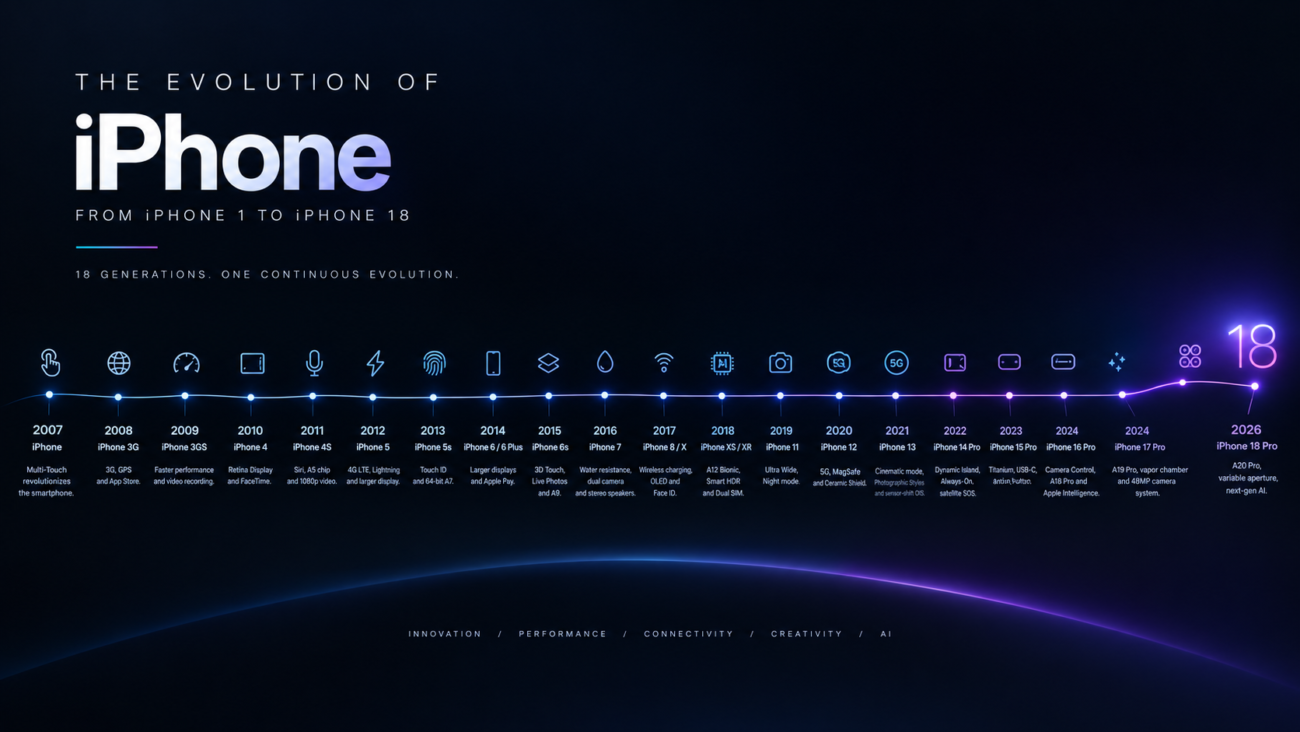
Evolution of the iPhone from 2007 to iPhone 18 Pro
Introducing the iPhone 18 Pro
Apple has officially introduced the iPhone 18 Pro and iPhone 18 Pro Max, its latest high-end iPhone models.
Rather than focusing on a single headline feature, Apple has improved several key areas at once: camera technology, performance, thermal management, battery life, connectivity and artificial intelligence.
The iPhone 18 Pro introduces a new 48MP Fusion Main camera with variable aperture, Apple’s A20 Pro chip built on a 2-nanometer process, a next-generation vapor chamber for improved sustained performance, and longer battery life.
Apple is also expanding the role of Apple Intelligence and introducing its next generation of AI-powered features with iOS 27.
The result is an iPhone designed not only to be faster, but also to provide greater control, better sustained performance and a more intelligent everyday experience.
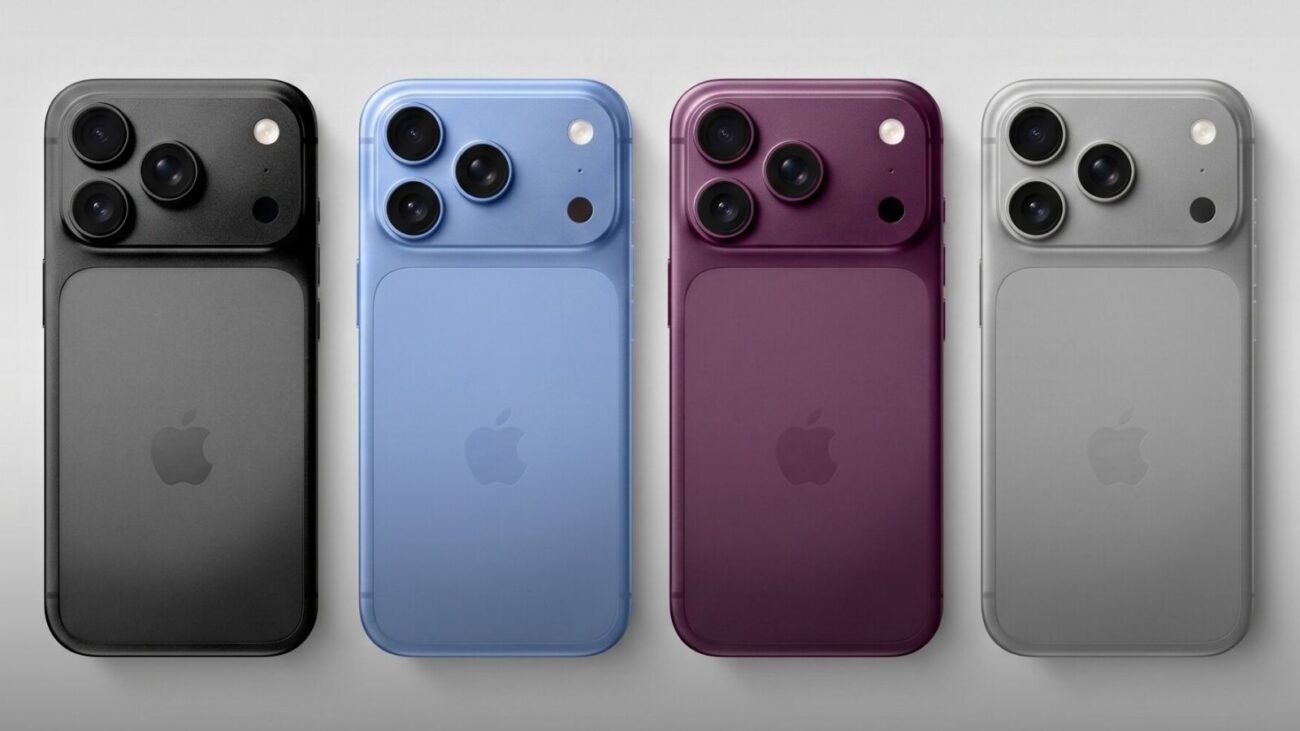
iPhone 18 Pro and iPhone 18 Pro Max
A New Era of iPhone Photography
One of the biggest developments in the iPhone 18 Pro is its camera system.
Apple introduces a new 48MP Fusion Main camera with a six-blade variable aperture, bringing aperture control to the iPhone for the first time.
Users can adjust the aperture to control how much light enters the camera and how much of the scene remains in focus. With settings ranging from ƒ/1.48 for low-light photography to ƒ/4 for greater depth of field, the camera provides more creative control than previous iPhone generations.
Apple is also introducing new Pro Controls that give photographers more direct control over settings such as aperture, shutter speed, white balance and histogram.
For photographers and content creators, this means greater flexibility directly from the iPhone.
This is another important step in the evolution of smartphone photography. The iPhone no longer simply captures an image. Its sensors, processor and software work together to analyze and process photographs in real time.
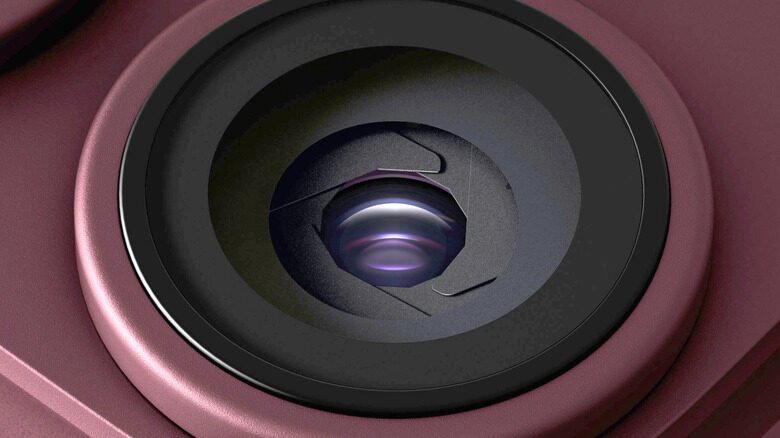
iPhone 18 Pro 48MP camera system
A20 Pro: More Power for the Pro Experience
At the heart of the iPhone 18 Pro is Apple’s new A20 Pro chip, built using an advanced 2-nanometer manufacturing process.
The A20 Pro features a new 6-core CPU, a 7-core GPU and a 16-core Neural Engine with dedicated neural accelerators designed to accelerate on-device artificial intelligence and computational photography.
Compared with the previous generation, the GPU can deliver up to 40% faster performance, while memory bandwidth increases by 50%. These improvements are designed to benefit demanding tasks such as gaming, video editing, photography and AI-powered features.
Apple is also introducing a next-generation vapor chamber thermal system with three times more surface area than the previous generation used in the iPhone 17 Pro. According to Apple, this can enable up to 40% greater sustained performance.
This is important because modern smartphones are no longer judged only by peak benchmark performance. They also need to maintain high performance during longer gaming sessions, video processing and other intensive workloads without excessive heat.
The A20 Pro therefore represents more than a simple speed improvement. It provides the processing foundation for the iPhone 18 Pro’s camera system, AI capabilities and demanding professional workflows.
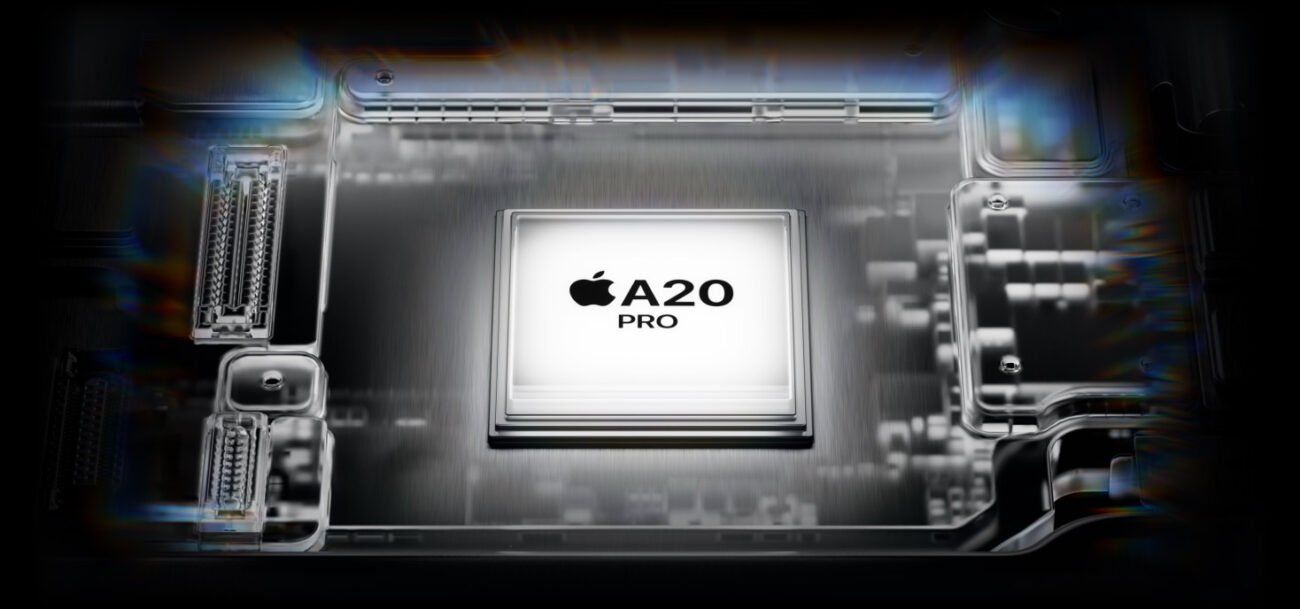
Apple A20 Pro chip in iPhone 18 Pro
Apple Intelligence and the New Siri
Artificial intelligence is becoming one of the most important parts of the smartphone experience.
The iPhone 18 Pro comes with iOS 27 and deeper integration of Apple Intelligence, including the new Siri AI experience designed to make Siri more personal, capable and conversational.
Siri can understand personal context, recognize what is happening on the screen and help users find information across apps such as Messages, Mail and Photos. It can also answer questions, assist with on-screen content and interact with the camera to provide useful information about what the user is looking at.
Apple is also expanding Apple Intelligence with features such as improved image editing, Image Playground, Spatial Reframing and other AI-powered capabilities integrated into the operating system.
Privacy remains a key part of Apple’s approach. Many Apple Intelligence requests are processed directly on the device, while more complex requests can use Private Cloud Compute.
This represents an important shift in the evolution of the iPhone.
AI is no longer simply an application that you open when you need it. It is increasingly becoming part of the operating system itself, working alongside the apps, camera and everyday features that people already use.
Apple Intelligence and Siri AI on iPhone 18 Pro
Battery Life: One of the Biggest Improvements
A faster processor and more advanced cameras are impressive, but none of them matter if the battery cannot keep up with the way people use their phones.
Apple is therefore putting significant emphasis on battery life with the iPhone 18 Pro generation.
According to Apple, the iPhone 18 Pro can deliver up to 36 hours of video playback, while the iPhone 18 Pro Max can reach up to 45 hours. This represents one of the most significant battery-life improvements ever offered on an iPhone Pro generation.
The iPhone 18 Pro Max benefits from its larger battery capacity, while both models take advantage of the efficiency improvements of the A20 Pro chip and Apple’s optimized hardware and software integration.
Charging has also been improved. The iPhone 18 Pro can reach up to 50% charge in around 15 minutes when using a compatible wired charger, while the Pro Max can reach approximately 50% in around 20 minutes under Apple’s specified charging conditions.
Apple also highlights an especially useful advantage for the Pro Max: just five minutes of wired charging can provide approximately seven hours of additional video playback.
For professionals, travelers, photographers and content creators who rely heavily on their smartphone throughout the day, these improvements can be more meaningful than a simple increase in processor performance.
Battery life is ultimately one of the features users experience every day, and the iPhone 18 Pro shows how Apple is combining a more efficient chip, improved thermal management and larger battery capacity to make that experience better.
A More Refined Dynamic Island
Apple is also refining one of the most recognizable elements introduced with the iPhone 14 Pro: the Dynamic Island.
On the iPhone 18 Pro, Apple has redesigned the Dynamic Island to make it smaller while maintaining the functionality of Face ID and the front-facing camera system.
The redesigned area can display up to three Live Activities simultaneously, allowing users to keep track of multiple real-time activities without leaving the app they are using.
This can be particularly useful for situations such as following a sports score, monitoring a delivery, tracking a journey or keeping an eye on an ongoing activity while using another application.
The Dynamic Island is a good example of Apple’s approach to product evolution. Instead of completely replacing an interface element every year, Apple continues to refine it and expand what it can do.
What started as a solution for integrating the front camera and Face ID hardware into the display has gradually become an interactive part of the iPhone experience.
With the iPhone 18 Pro, the Dynamic Island becomes smaller, more discreet and more capable, showing how even familiar elements of the iPhone can continue to evolve.
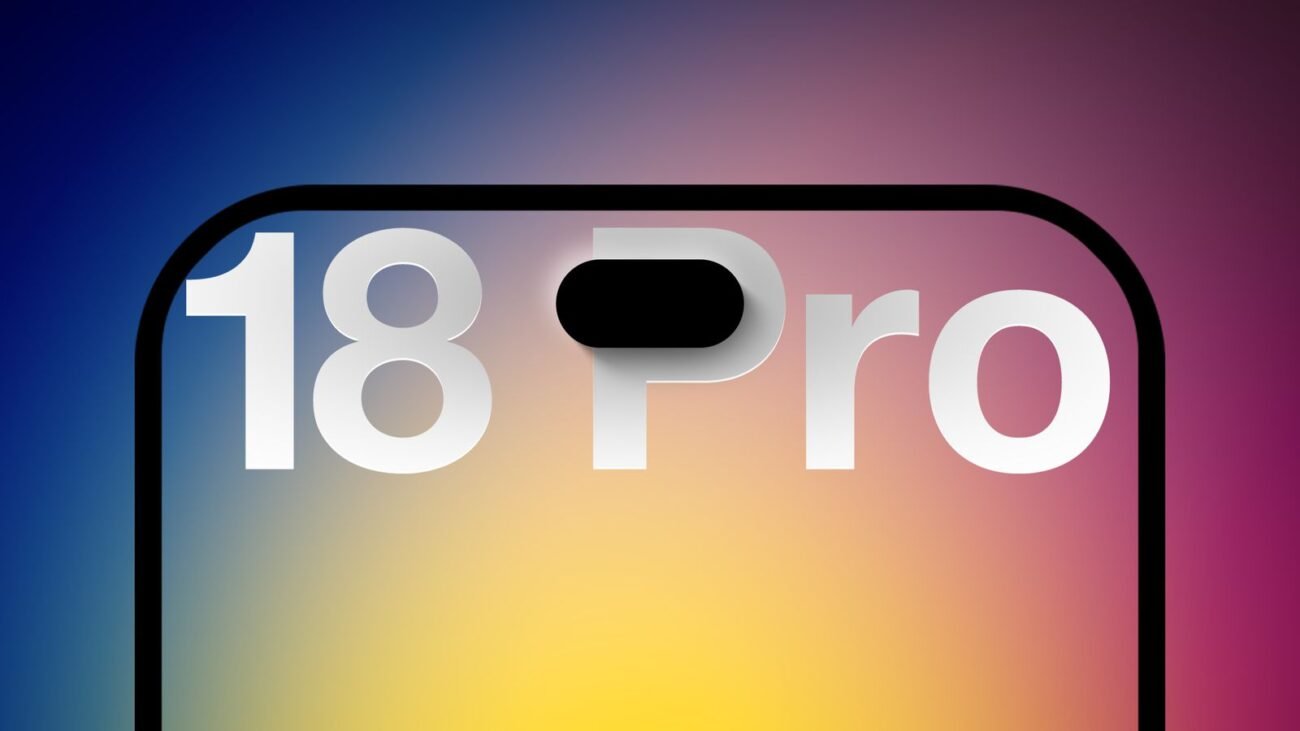
Dynamic Island on iPhone 18 Pro
The iPhone Keeps Evolving
Looking back at almost two decades of iPhone development, one thing becomes clear: Apple rarely changes everything at once.
Instead, the company takes the foundations of previous generations and progressively transforms them, often turning technologies that were once considered groundbreaking into essential parts of the everyday smartphone experience.
The original iPhone introduced multi-touch and a new way of interacting with a mobile device.
The App Store transformed the iPhone from a phone with built-in software into a platform capable of continuously expanding through third-party applications.
Retina changed expectations for smartphone displays, making high pixel density and sharp image quality a standard users would come to expect.
Face ID changed the way people authenticate themselves, replacing the physical Home button and Touch ID on Pro models with secure facial recognition.
The Pro camera systems transformed mobile photography, bringing increasingly sophisticated sensors, computational photography and professional video capabilities into a device that fits in a pocket.
Apple Silicon then pushed smartphone performance to new levels, allowing the iPhone to handle increasingly demanding games, video workflows, photography and machine-learning workloads.
Now, artificial intelligence is becoming the next major stage of this evolution.
With Apple Intelligence and the new Siri AI experience, the iPhone is moving toward a model where the device can understand more about the user, the content on the screen and the context of what they are trying to accomplish.
The iPhone 18 Pro therefore represents more than another annual hardware upgrade. It is another step in a long process of transforming the smartphone from a communication device into a powerful, intelligent and increasingly versatile personal computer.
And Apple’s evolution of the iPhone is clearly not finished yet.
And Then There Is the Foldable iPhone
Apple has also entered an entirely new category with iPhone Duo, its first foldable iPhone.
When opened, iPhone Duo features a 7.6-inch inner display designed to provide a much larger viewing area for multitasking, gaming, entertainment and productivity. It also features a 5.4-inch outer display for everyday use when the device is folded.
The foldable design allows Apple to offer a larger screen without requiring the device to remain the size of a traditional tablet.
Inside, iPhone Duo is powered by the A20 Pro chip and uses a dual-battery architecture together with an advanced thermal system designed to manage the demands of its larger display and high-performance hardware.
After years of foldable smartphones from competing manufacturers, Apple’s entry into this category marks another potentially important chapter in the evolution of the iPhone.
A foldable design opens possibilities that are difficult to achieve with a traditional smartphone, particularly for multitasking, reading, gaming, video and productivity.
It also signals something important about Apple’s vision for the future of the iPhone: the smartphone does not necessarily have to remain a single-screen device.
The introduction of iPhone Duo shows that the evolution of the iPhone is no longer limited to making a conventional smartphone faster or more capable. Apple is now exploring entirely new ways of designing and using the device.
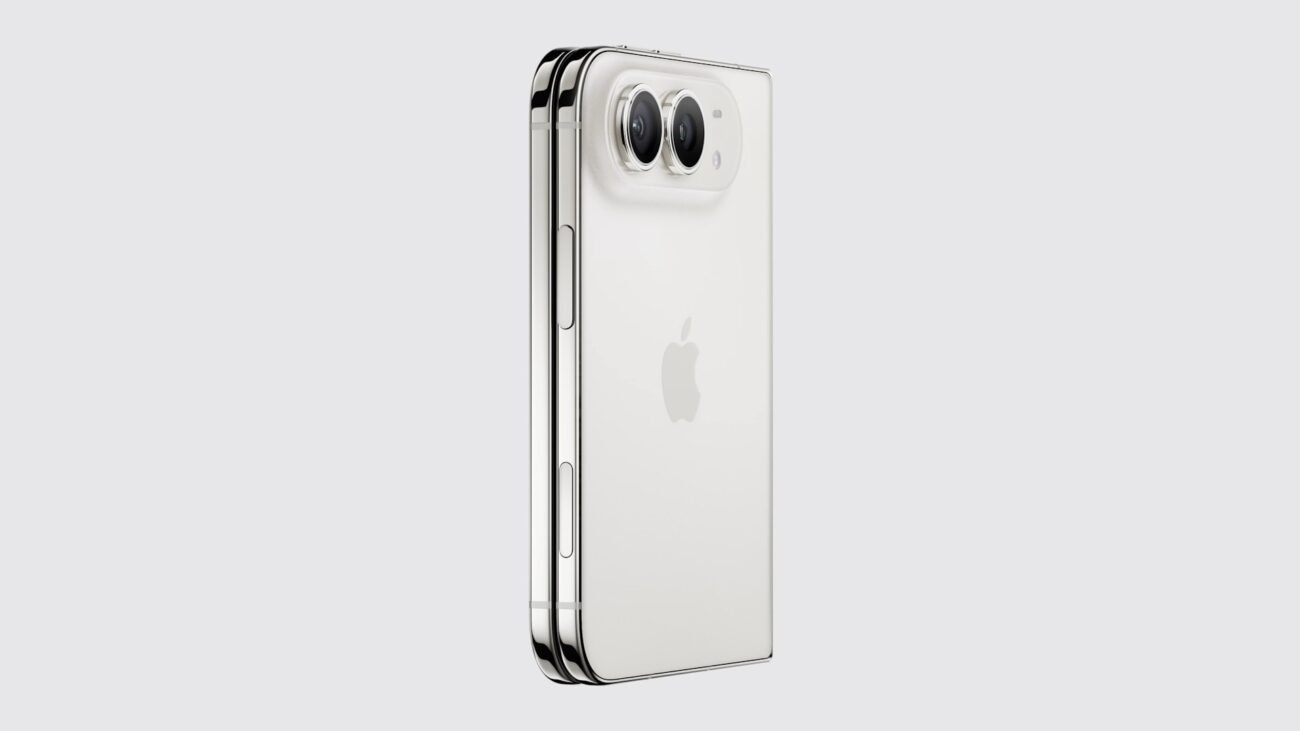
Apple iPhone Duo foldable smartphone
Should You Upgrade?
Coming from an older iPhone?
The difference can be substantial. Users upgrading from several generations back can benefit from major improvements in performance, camera quality, display technology, battery life, connectivity and software capabilities.
The iPhone 18 Pro is particularly compelling for users who want a significant jump in photography, gaming, video creation or AI-powered features.
Coming from an iPhone 15 Pro or 16 Pro?
The decision becomes more personal. These devices are still highly capable, so upgrading is less about basic performance and more about the specific features you will actually use.
The new 48MP Fusion Main camera with variable aperture, A20 Pro performance, improved thermal management, longer battery life, enhanced connectivity and new AI capabilities could make the upgrade worthwhile for demanding users.
Already using a recent Pro model?
Upgrading every year is not necessarily necessary.
The iPhone 18 Pro is designed as an evolution rather than a complete reinvention. Its improvements become most valuable when they solve a real need: better control over photography, longer battery life, sustained performance, faster connectivity or deeper AI integration.
The best reason to upgrade is therefore not simply having the newest iPhone number. It is having features that genuinely improve the way you use your phone every day.
TechStorm’s Take
The history of the iPhone is ultimately a history of convergence.
What started in 2007 as a revolutionary combination of a phone, an iPod and an internet communicator has evolved into a powerful computer that fits in your pocket.
The iPhone 18 Pro continues that evolution by bringing together advanced photography, powerful Apple silicon, improved thermal management, longer battery life, faster connectivity and increasingly sophisticated artificial intelligence.
What makes this generation particularly interesting is the combination of these technologies. The variable-aperture camera gives users more creative control, the A20 Pro provides greater sustained performance, and Apple Intelligence is becoming more deeply integrated into the everyday iPhone experience.
And with Apple now exploring completely new form factors such as the foldable iPhone Duo, the next chapter of the iPhone story could be even more interesting.
Choosing Your Next iPhone with TechStorm
At TechStorm, we believe choosing a smartphone is about more than specifications.
The right iPhone is the one that matches your needs, your daily usage and your budget. A Pro model may be ideal for a content creator or professional, while another user may benefit more from a different iPhone configuration.
Whether you are a private customer, student, professional or business, our team can help you understand the differences between models, choose the right Apple device and select the accessories that complete your setup.
At TechStorm, our goal is not simply to sell you the latest device. We provide advice before your purchase and ongoing support to help you get the most from your technology.
Interested in the latest iPhone generation? Follow TechStorm for availability updates, product information and expert advice on choosing your next Apple device.
TechStorm — The Art of Technology Support.